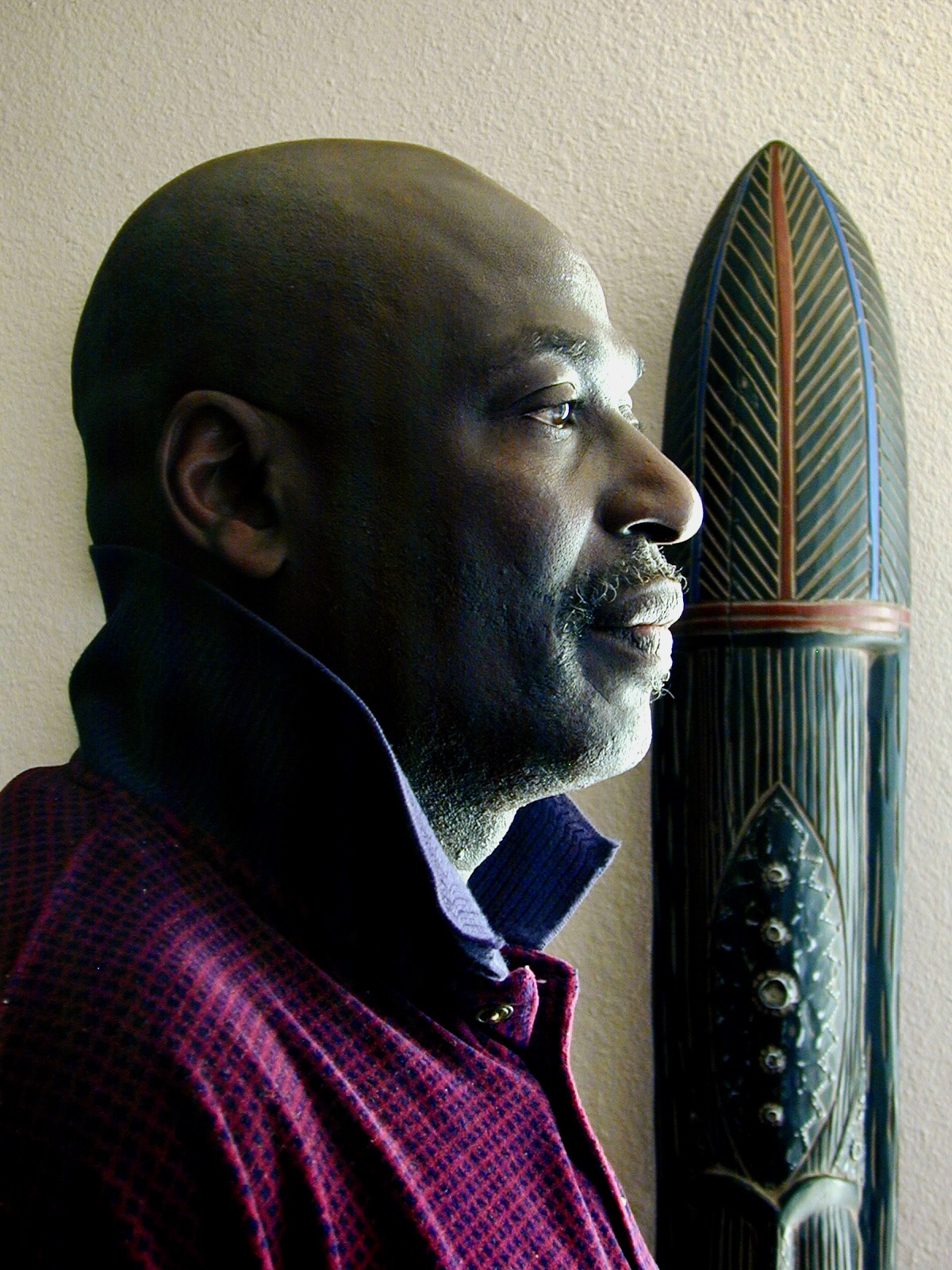
In 1968, Rowland “Joe” SaiSai and his friends were signing up for the army on the rebel side in the Nigerian Civil War. When most boys were lining up at the theater for the new sci-fi movie, Joe, 12 years old, was singled out from his peers and accepted into the army because of his large size. After only two (2) weeks of training with fake guns, Joe was placed on the front line, in the heart of the battle. Joe’s testimony reads like a Hollywood movie script; Joe, a former Nigerian Olympian and the son of a voodoo high priest, enlists in the Nigerian Civil War at 12 years old and fights against his estranged father, who served the oppressive government. Before we hear about Joe’s heroic war story, we get a glimpse of his beginnings as a child in a voodoo culture.
In Joe’s village, voodoo was widely practiced, and the alligator was a god to be worshipped. Sacrifices were offered to alligators in hopes that individuals and/or families would receive protection from predators. Joe’s Father, was the high voodoo priest of their village, Ijaw, located in West Nigeria, and it wasn’t uncommon for a priest to ask a mother to give over her children as a human sacrifice to appease the gods. Joe’s father had two (2) wives, one of whom was his mother.“Polygamy was the norm in the Nigerian community,” says Joe. “Most every man has more than one wife. It’s a symbol of status.” Joe’s family had status due to their legacy of voodoo priests.
When Joe’s mother was pregnant with him, she feared being asked to surrender her unborn child as a sacrifice. She knew she would refuse such demands, and that this would invite ridicule, chastisement, and even severe persecution. This created a sense of urgency for her to escape from the village, as she had no intention of sacrificing her unborn Joe to the alligator god. Pregnant, determined, and fearful, she escaped from Ijaw with her eldest son, who was about seven (7) years old at the time, and sought refuge with her brother. She was now the wife of a voodoo priest on the run and soon faced an even more challenging trial.
When Joe was five (5) years old, his 12-year-old brother became gravely ill, an unexpected and frightening ordeal. Although fearful for her son’s life, Joe’s mother risked taking him back to the village they had fled to seek the assistance of village witch doctors. She believed that the only hope for her son was the medicinal craft of these respected sorcerers. Joe’s brother was taken on numerous trips back to the village, where he was subjected to customary treatments and spiritual incantations by various witch doctors; however, none of their efforts worked. Joe’s brother’s condition continued to deteriorate, and the witch doctors blamed the failed results on the sins of Joe’s forefathers. They concluded that the gods were punishing Joe’s family because of their refusal to perform the appropriate sacrifices to the gods over the years. This diagnosis was terminal for Joe’s brother until hope presented itself in the most unlikely person for the most unlikely reason, given his family’s belief system.
Hope came from a Christian woman Joe’s mother met in the city. After learning about her son’s grave condition, the woman asked Joe’s mother to attend a night prayer service. “My mom took my brother to the service out of desperation,” Joe says. His brother’s condition was worsening, and their familiar customs and religious practices had failed their family.
Joe’s brother’s conduct was what many would consider demonic.“At first, my brother was acting like the devil; demon-possessed; throwing up; foaming at the mouth; speaking in demon tongues; and making deep-sounding voices that didn’t sound human. I was five, and it was scary. The pain I was feeling the most was the emotional pain my mother was going through.”
Joe’s brother’s behavior was so disruptive that the church leaders chained him outside the church. The prayer service proceeded with intensity, and as it did, Joe’s brother began describing the demonic beings he saw. Finally, at the end of the service, which was late in the evening, Joe’s brother appeared to be sedated by a spirit of peace. Three days later, he had fully recovered. “At that time, I made the decision that since this is the God who saved my brother, this is the God I will serve. Every church service we were there,” said Joe.
Having dealt with the demons and challenges that haunted his childhood, Joe takes me back to his Civil War experiences and tells me about the challenges he faced as a 12-year-old soldier.
In 1966, the Civil War in Nigeria began. “We lived in the part of the city that wanted to break off and be a country of its own,” Joe explains. He and his friends immediately volunteered to join the army out of naiveté, thinking military combat would be fun and exciting; however, reality hit after only 2 weeks of training, when Joe was sent to the front line. He was 12 years old, without a uniform, without his friends, and armed with a Mark IV single-shot rifle.
The rebel soldiers did not have a budget for uniforms. A rebel soldier obtained a uniform by killing an enemy and taking the uniform as part of the plunder. After obtaining the deceased’s uniform, the soldier faced a difficult decision, to wear it and risk being attacked by fellow rebel soldiers for the chance to infiltrate the enemy, or to continue without it and risk being identified and attacked by the enemy. Despite the risks, it was common practice for a rebel soldier to kill an enemy and use the uniform as a strategy to gain control over the enemy’s base. The possible success of an infiltration outweighed the risk of death, and it was a leap of faith to exercise this strategy.
Joe’s faith in God grew through his military experience, as he believed God’s divine protection was covering him. I’ll let Joe testify in his own words now: “You can smell the smell of death. We had a Mark IV rifle that fired one bullet at a time, and the government had machine guns. You’re in the front; you can’t go back. I thought, what did I get myself into, with bullets flying by your head so close that you can hear them? I must have been in a trance. God was protecting me big time.”
Joe described an incident that happened in a foxhole as his troop was advancing to take over one of the government’s bases. “Both guys on my side were dead. I stood up out of fear and ran back. People were telling me to get down. I jumped into another foxhole, and my troop was mad and started hitting me,” Joe leans back and chuckles. “I threw a tantrum and left for another foxhole. As soon as I left, it was bombed. I saw body parts flying everywhere. Most of those around me had shell shock. I didn’t. I was perfectly fine.” Things didn’t stay fine for Joe. He would soon find himself in a confining situation.
Joe was incarcerated in a military prison camp for 2 weeks for the charge of Absent Without Leave (AWOL). He received this charge after bravely transporting a wounded rebel soldier back to safety. After a short time in the camp, a Lieutenant, who was the father of one of his childhood friends, granted him release. As he was about to exit a military checkpoint, he was immediately detained. Unfortunately for Joe, the other high-ranking officers were not notified of Joe’s unofficial discharge, and he served two weeks in the prison camp without a meal before going to trial. “Occasionally, if it was a nice M.P. (Military Police), he would let me go to the farm and pick yams or palm tree nuts,” Joe said.
After serving two weeks in prison, Joe had a trial and, once again, was sentenced back to the front line. A few days later, the war had ended, and the rebels had lost. Joe learned that his father, who was fighting for the government army, had been killed. Although Joe had been estranged from his father, the news was devastating. Almost immediately, Joe had to transition from this chaotic life as a rebel soldier and fatherless boy back to the life of a carefree schoolboy. During this period, Joe returned to the village for a rites of passage ceremony. He would now have to kill a large python to prove his manhood. Joe was 13 years old, naturally strong and athletic, just a few of the skills he would need to meet his rites of passage challenge and gain opportunities he never dreamed of.
Joe’s athleticism earned him national attention in Nigeria. As he continued to develop, his talent drew the attention of Palomar University in San Diego, California, a university on the other side of the world. Palomar University awarded Joe a full athletic scholarship, and he made good use of it by earning a Bachelor of Arts(B.A.) and a Master of Arts (M.A.) in physical education.
“When I was running, I knew it was by God’s inspiration I was winning.”
In 1976, Joe made the Nigerian Olympic team; however, because of his country’s protest against apartheid in South Africa, Nigeria refused to compete. Joe has since used his education from Palomar University and his wealth of life experience to help misguided youth at the California Youth Authority (CYA) get back on the right track in life.
“Even though the state tries to separate the church and the state, it is the Godly counsel that has impacted most of the kids to a permanent change in their lives. Secular counseling has only provided a temporary bandage, in that it’s only a temporary change,” Joe says.
“Since my brother’s illness, church has been a part of me. Looking back at my dad and all the things he worshipped and was into, I would have been in that lifestyle and probably a voodoo priest. I believe God opened the way for me to be here.”
From voodoo to war to prison to college to counseling, one thing Joe has experienced has remained constant in his life, his belief in God and the power of faith. If God can open the way for Joe and bring him through situations where he was destined for disaster, what more will he do for you? Hearing Joe’s story truly conveys that nothing is too hard for God.
By Rayford “Brotha Ray” Johnson